Introduction
Bispecific antibodies enable therapeutic strategies that cannot be achieved with conventional monospecific antibodies by engaging two molecular targets within a single molecule. Approved bispecific antibodies demonstrate mechanisms such as immune cell redirection or functional bridging of molecular components, leading to enhanced target specificity.
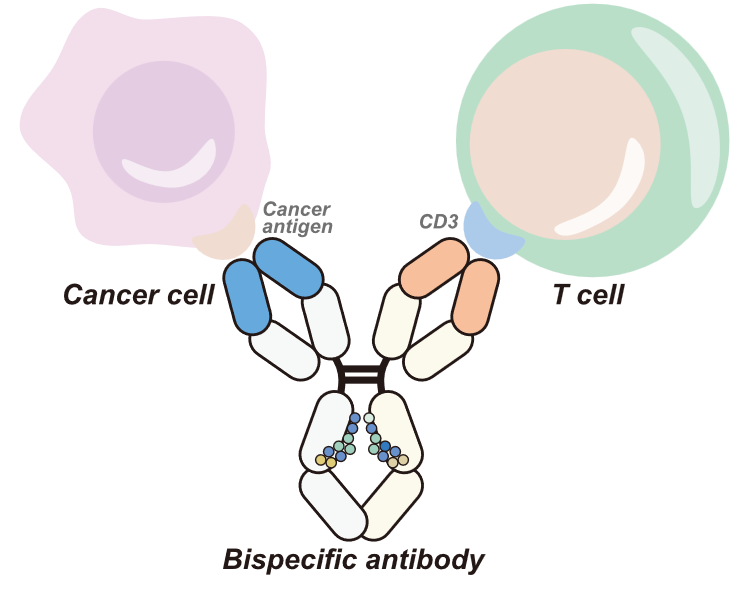
Because of their complex architectures and sensitivity to manufacturing conditions, evaluation of higher order structure (HOS) is important for ensuring product quality and consistency during development, manufacturing process.
Circular dichroism (CD) spectroscopy is a rapid and robust experimental method for HOS assessment of conventional antibodies and is widely used in comparability and stability studies. In this poster, we show that combining CD experiments with machine enables robust evaluation of HOS differences in bispecific antibodies produced by different manufacturing processes.
Experimental
Results
STRUCTURE CHARACTERIZATION
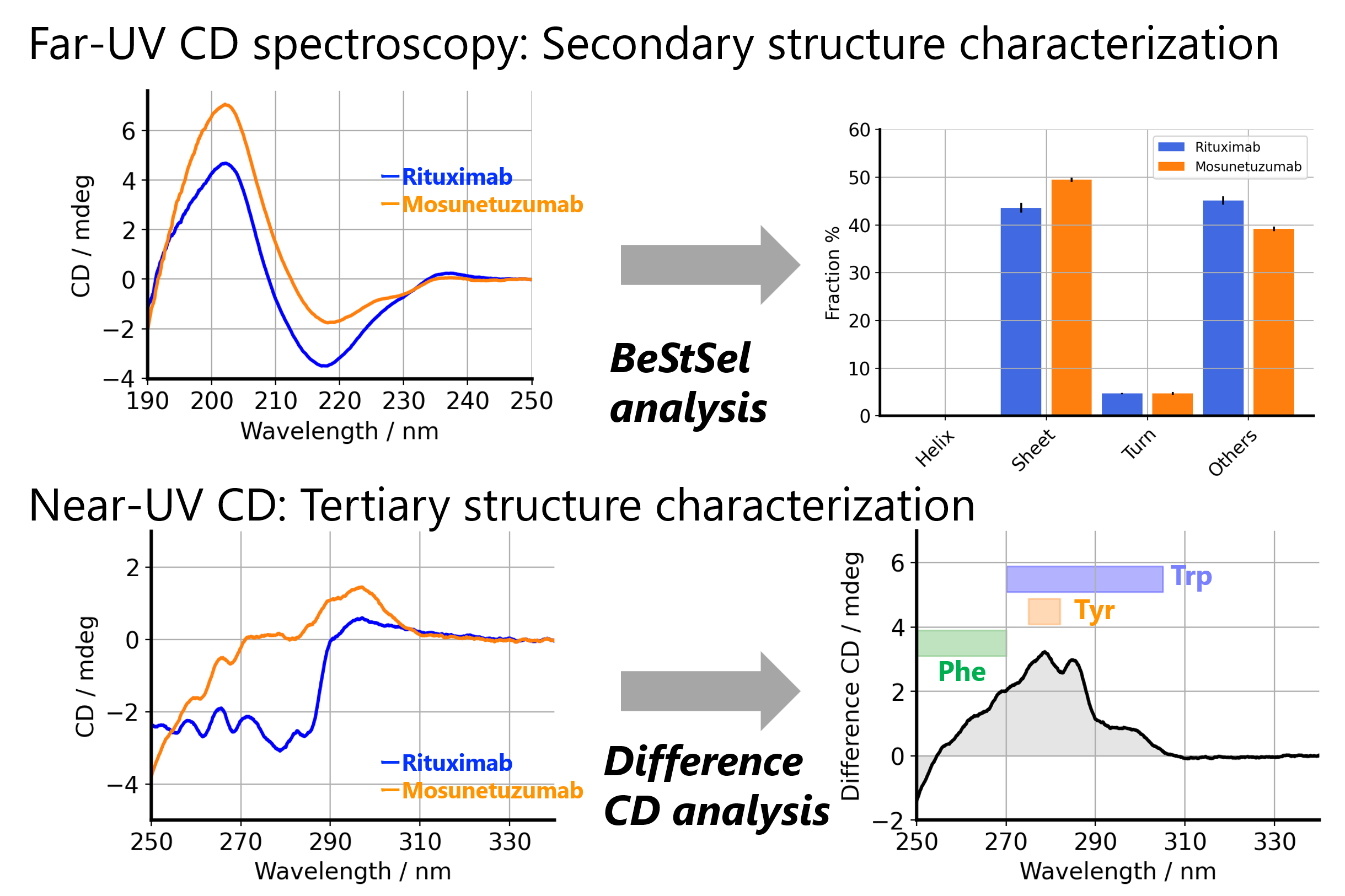
CD spectroscopy provided information on the secondary (far-UV CD) and tertiary (near-UV CD) structures of the antibodies. Combination of the BeStSel to the far-UV CD spectra enabled accurate quantification of secondary structure contents. The near-UV CD spectra allowed discrimination of differences in the local environments of aromatic amino acid residues.
SIMILARITY STUDY
CD spectroscopy is effective as a structural fingerprint for antibodies; however, comparison of CD spectra between two antibodies has long relied on visual inspection. By applying the qHOS method proposed by JASCO Corporation, the equivalence and statistically significant differences between CD spectra could be evaluated objectively using statistical testing.
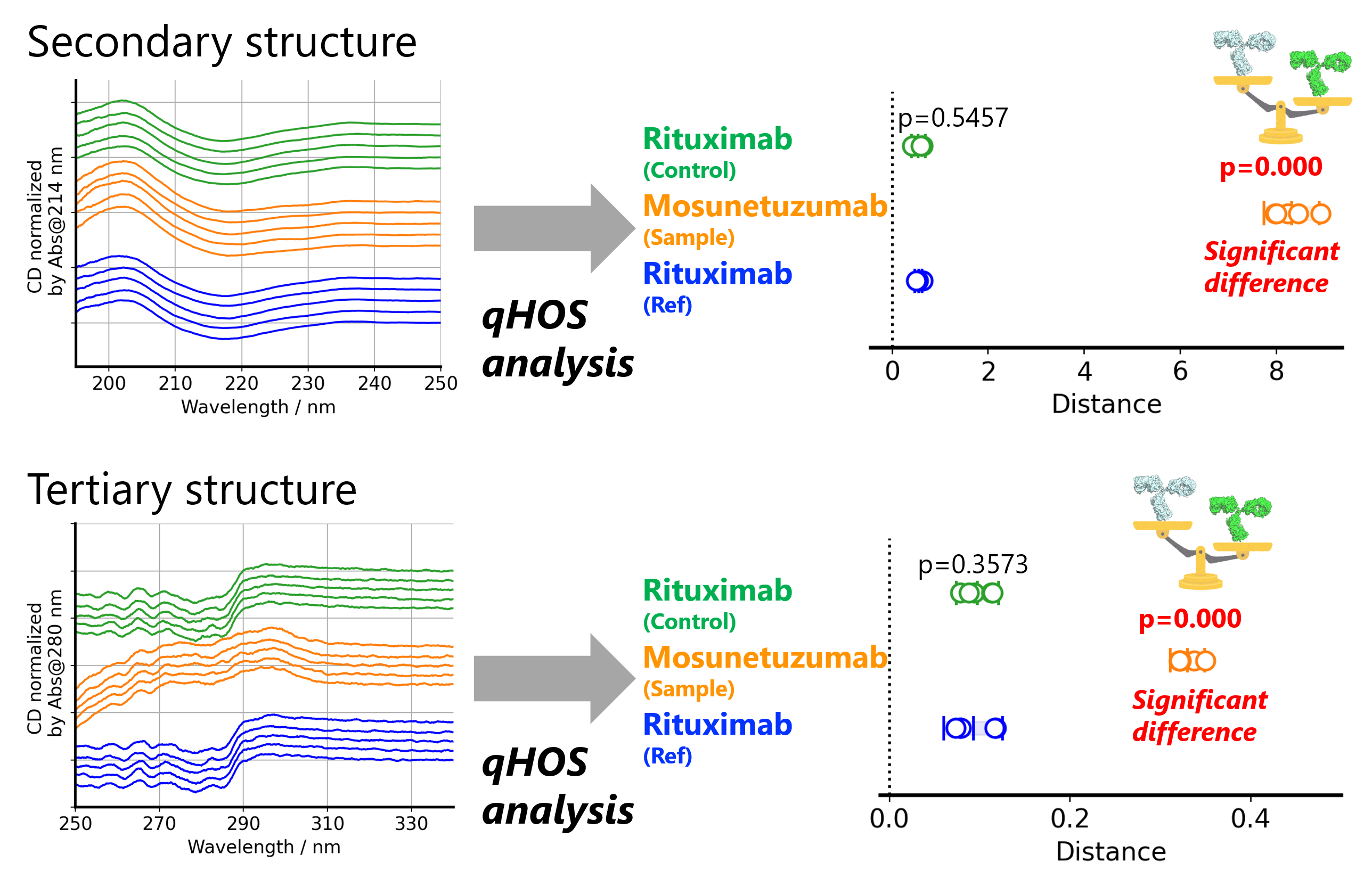
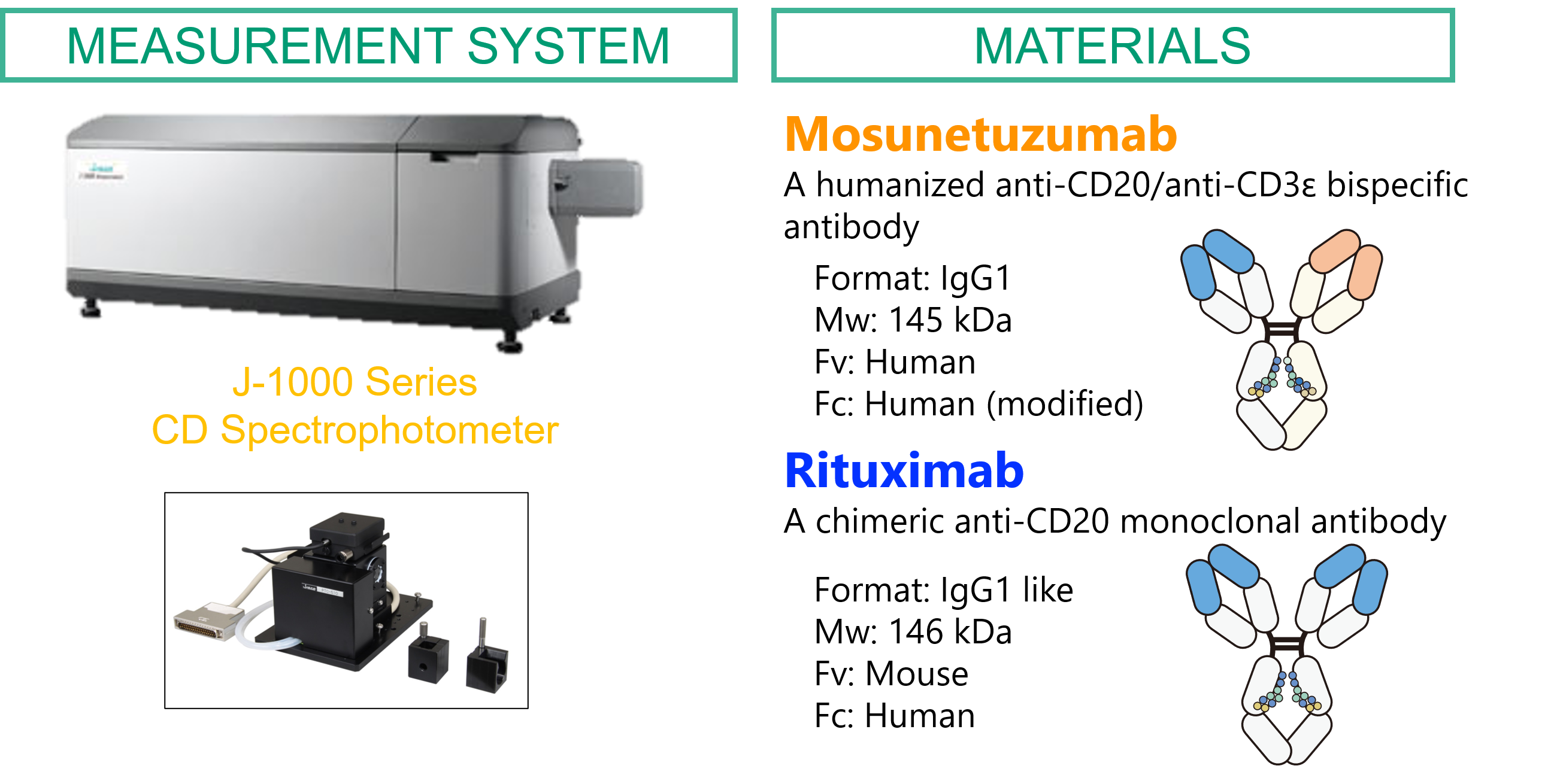
Quantitative evaluation using the qHOS approach enabled numerical comparison of spectral differences. For both near-UV and far-UV CD spectra, the spectral distances between the reference and control rituximab samples were small, and no statistically significant differences were observed. In contrast, mosunetuzumab exhibited substantially larger spectral distances, with p-values below 0.05, indicating statistically significant differences.
STABILITY CHARACTERIZATION (THERMAL DENATURATION)
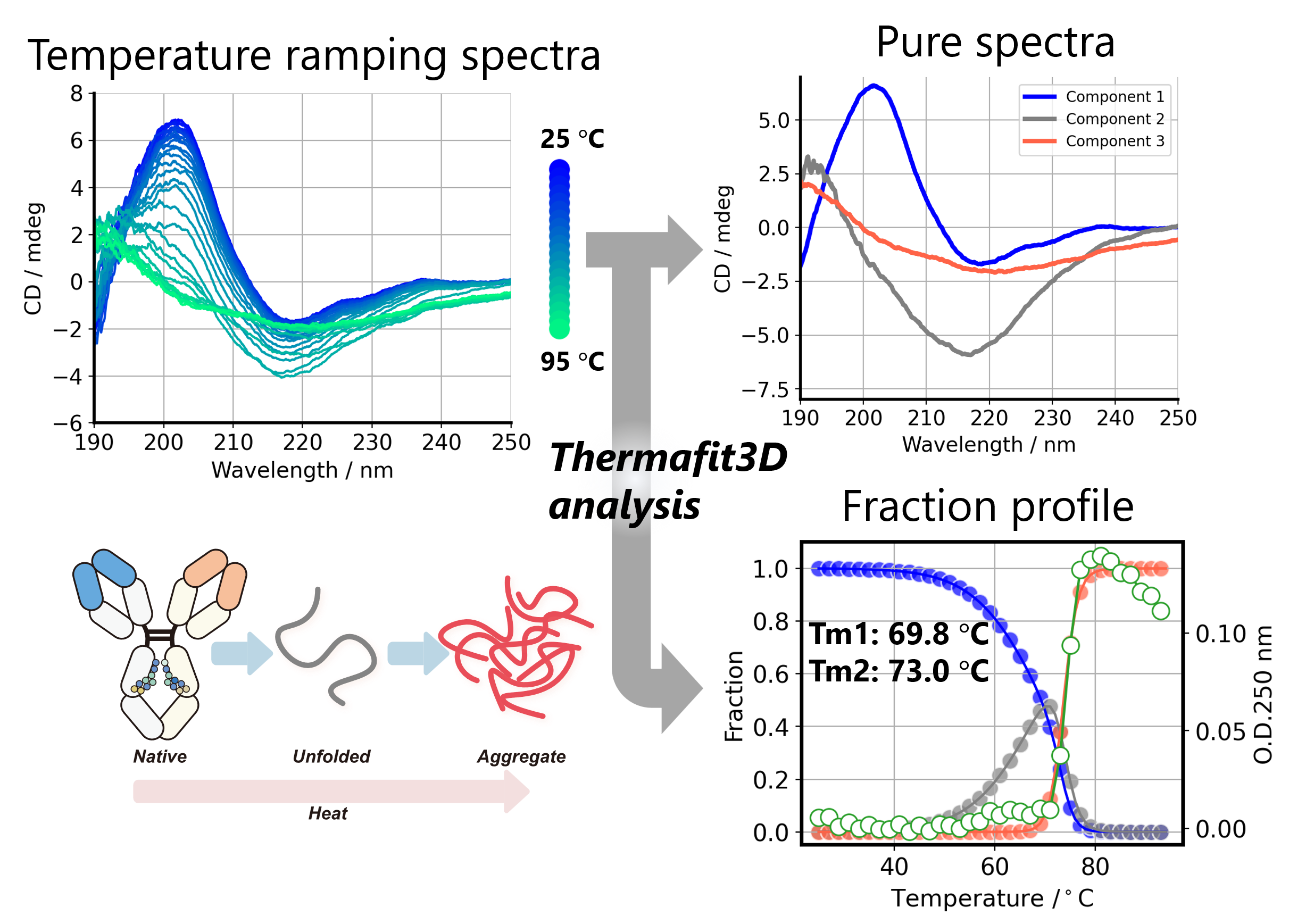
Thermal denaturation experiments were used to evaluate the thermal stability of antibodies; however, it was difficult to infer detailed thermal denaturation mechanisms using conventional analyses. By applying the ThermaFit3D approach, which can deconvolute multiwavelength thermal denaturation data enabled evaluation of the CD spectra and fraction profiles of individual chemical species involved in thermal denaturation, including intermediates, as well as the associated thermodynamic parameters.
STABILITY CHARACTERIZATION (CHEMICAL DENATURATION)
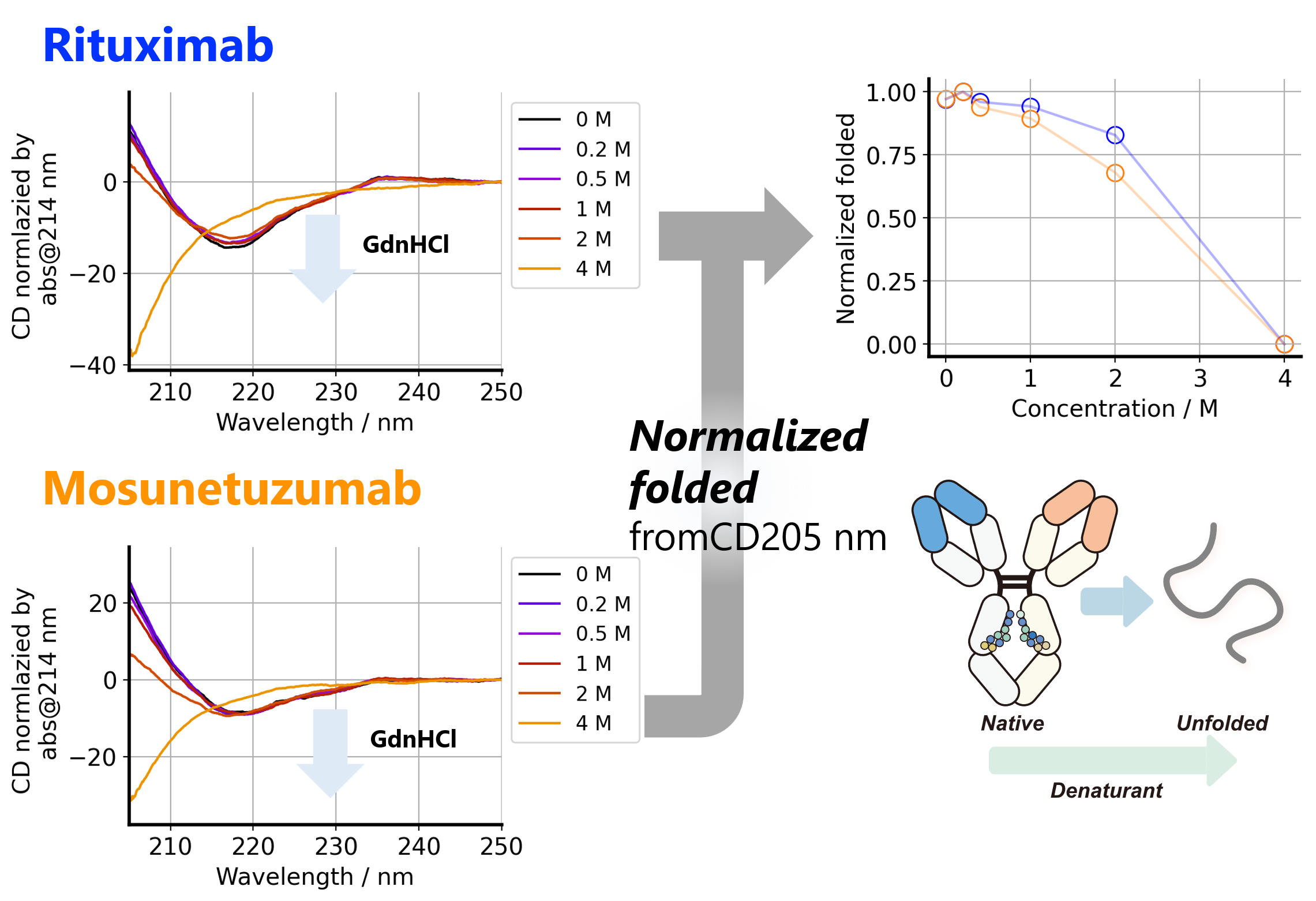
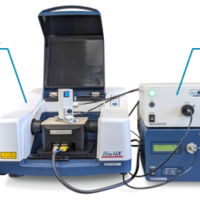
Chemical denaturation experiment is orthogonal to thermal denaturation for evaluating antibody stability. However, chemical denaturants often exhibit strong absorption in the ultraviolet region, which frequently hampers the application of CD. Although the use of demountable short-path-length cells enables such measurements, variability in optical path length can interfere with accurate analysis. The J-1500 system allows highly accurate absorbance measurements to be acquired simultaneously with CD spectra, enabling correction for variations in optical path length and sample concentration. As a result, high-precision chemical denaturation experiments could be achieved.
References
Poster Session at PSSJ 2026 (The 26th Annual Meeting of the Protein Science Society of Japan, June 17 – 19, 2026, in Tottori, JAPAN)
Taiji Oyama1, Forrest R. Kohl2, Ai Yamane1, Ken-ichi Akao1, Satoko Suzuki1, Kouhei Tsumoto3
1JASCO Corporation, Hachioji, Tokyo, 192-8537, Japan,
2JASCO Inc., Easton, MD, USA
3Department of Chemistry & Biotechnology, School of Engineering, The University of Tokyo, Bunkyo-ku, Tokyo 113-8656, Japan