5. Light Measurement System
The light measurement system consists of a detector, an amplifier, and a lock-in amplifier (Figure 13). The light received by the detector is converted into an electrical signal that is proportional to the light intensity. This signal is then amplified by the amplifier, and the lock-in amplifier detects the slight intensity difference between the LCP and RCP light with high sensitivity.
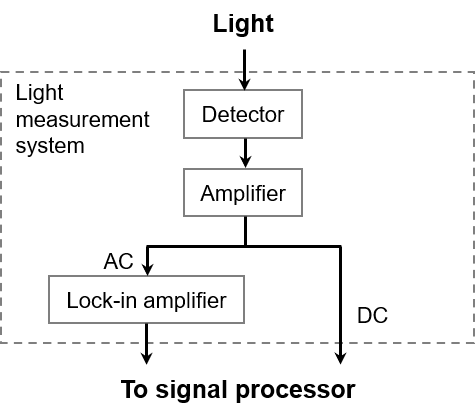
Fig. 13 Configuration of light measurement system
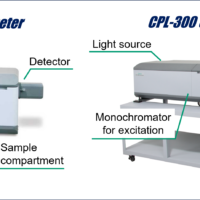
A CPL signal detector must be highly sensitive, have a fast response time, and be unaffected by the polarization characteristics. To satisfy these conditions, a photomultiplier tube is commonly used as the detector. Figure 14 shows the time course of the light intensity detected by the detector when a CPL sample is set in the sample compartment. The light received by the detector produces a signal with a frequency corresponding to the modulation frequency of the PEM. The direct current (DC) component represents the average luminescence intensity (IA), while the alternating current (AC) component represents the intensity difference (ΔI) between LCP and RCP light.
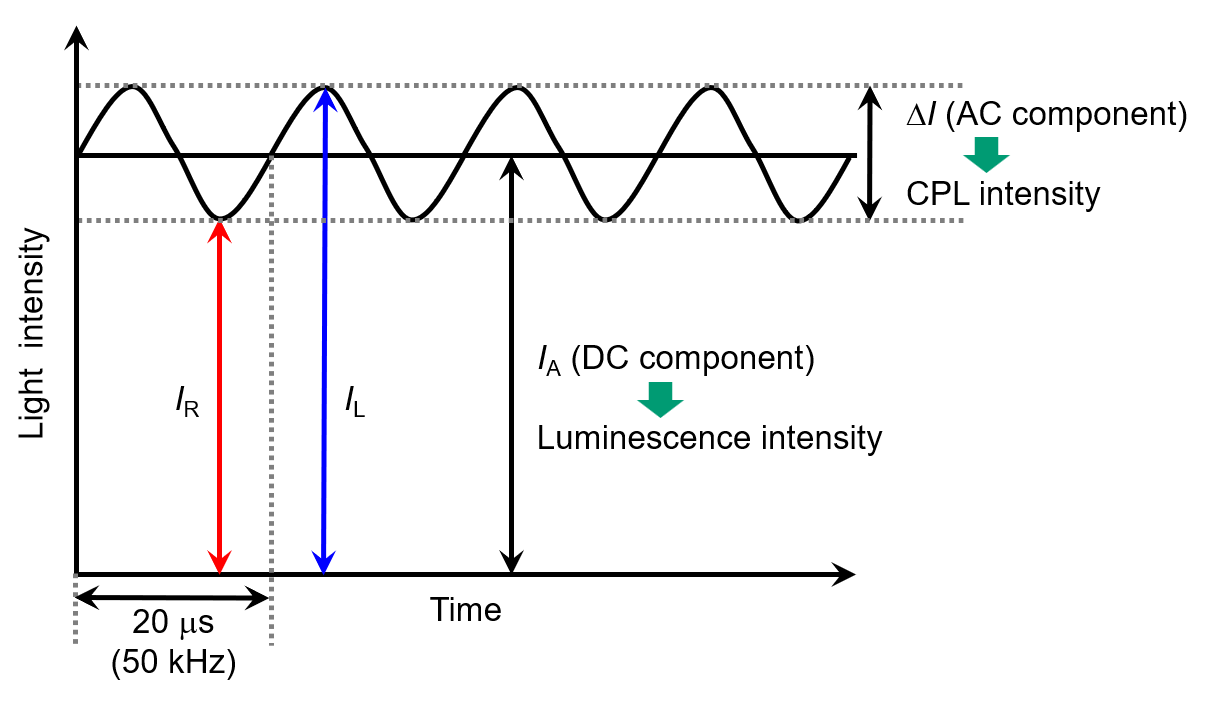
Fig. 14 Time course of light intensity detected by detector
In actual CPL measurements, depending on the sample, the luminescence intensity may be extremely high. This corresponds to a very large DC signal component, on which is superimposed a weak AC component produced by the PEM. In this situation, the AC component is buried in white noise, and must be extracted to give a meaningful CPL signal. This is the function of the lock-in amplifier, which performs amplification of signals only at the frequency of the PEM, and so can filter out the strong DC component. It is capable of performing selective amplification by a factor of 108 times or more, allowing CPL signals with input amplitudes of only a few microvolts to be extracted.
The CPL-300 therefore employs a combination of a photomultiplier tube and a lock-in amplifier to achieve a wide dynamic range, high-sensitivity detection, and reduced measurement time.