4. Polarization Modulator
CPL from the sample is converted into linearly polarized light using a polarization modulator. In CPL spectroscopy, a photoelastic modulator (PEM) based on the piezoelectric effect is commonly employed, with a polarizer positioned downstream of it. As shown in Figure 11, the PEM consists of quartz glass coupled with a crystalline quartz piezoelectric actuator. When stress is applied along the long axis of the quartz, birefringence is induced due to directional changes in the refractive index, creating a phase difference between vertical and horizontal light components. Operating the PEM at 50 kHz modulates this birefringence at the same frequency.
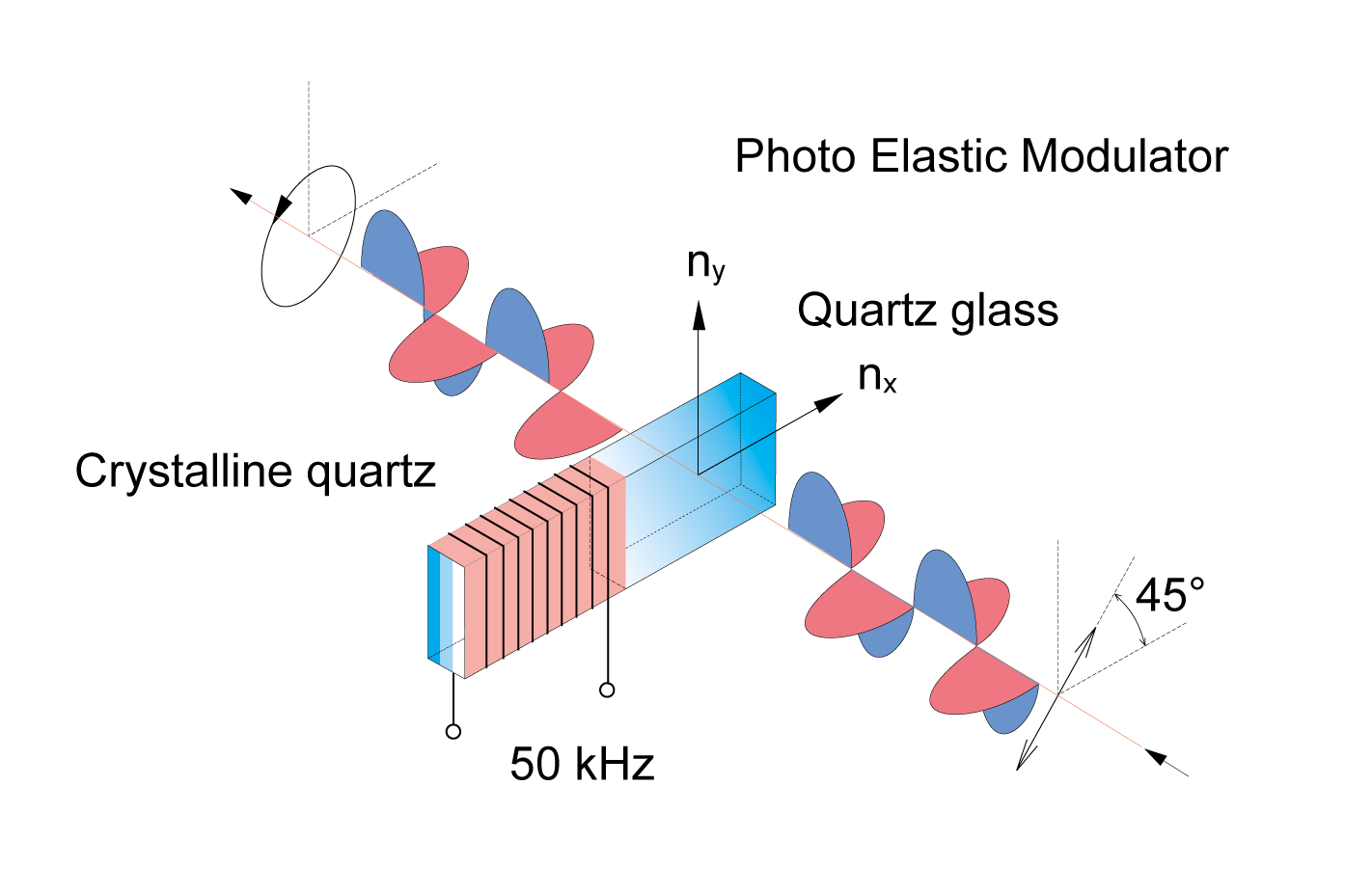
Fig. 11 Appearance of PEM
Figure 12 illustrates the effects of the PEM-induced phase difference (Δ) on the light polarization and intensity. When Δ = 0, the intensity of the light transmitted through the polarizer represents the average for LCP and RCP light (IA). When Δ = +λ/4, the intensity corresponds to that for RCP light (IR) alone, and when Δ = -λ/4, it corresponds to that for LCP light (IL) alone.
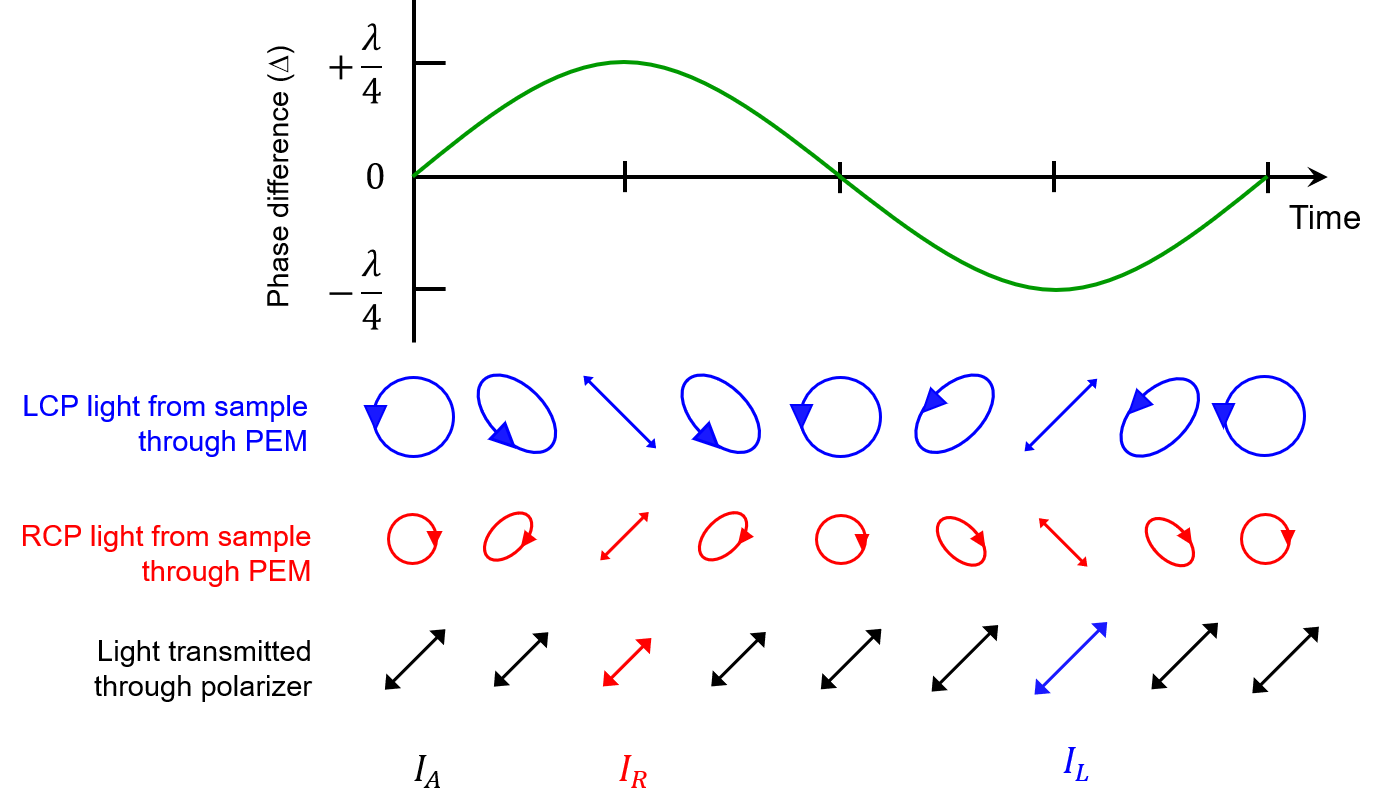
Fig. 12 Relationship between PEM-induced phase difference, polarization direction, and light intensity