
3. Sample Compartment
CPL spectrometers can be configured with a sample compartment using either a 180° or 90° optical configuration. Figure 9 illustrates the relationship between the polarization of the excitation light and the emitted fluorescence for these two configurations.
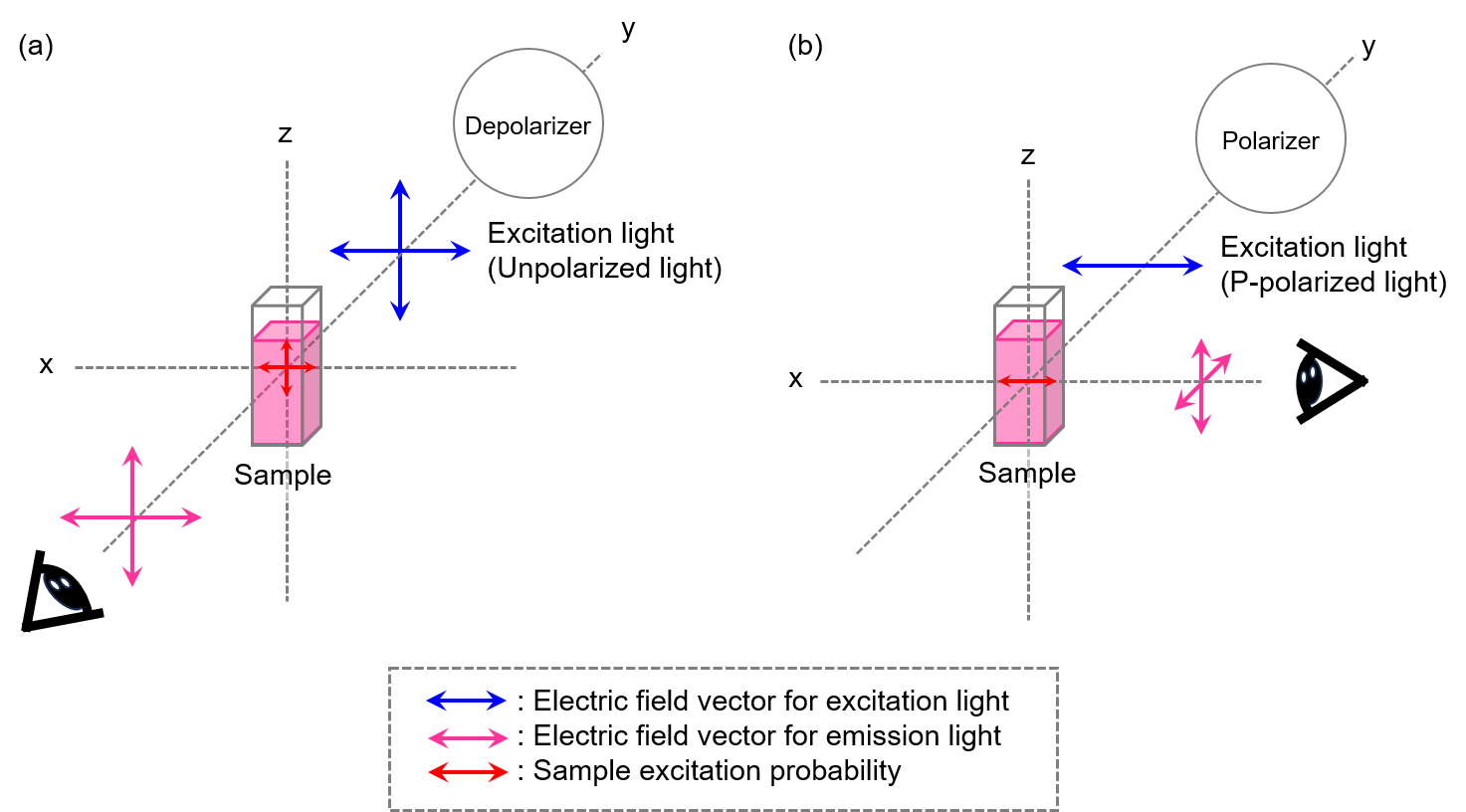
Fig. 9 Relationship between polarization of excitation light and fluorescence:
(a) 180° and (b) 90° sample-compartment optical configurations
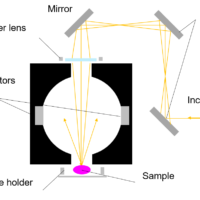
In both the 180° and 90° configurations, the sample is placed at the origin of the x-, y-, and z-axes and irradiated along the y-axis. The isotropically emitted luminescence is detected along the y-axis in the 180° configuration and along the x-axis in the 90° configuration. To ensure unbiased detection of the horizontal and vertical electric-field components, the excitation light must be unpolarized in the 180° configuration using a depolarizer, and p-polarized in the 90° configuration using a polarizer. In the 90° configuration, the use of a polarizer causes a significant loss of excitation light, which is undesirable when measuring weak CD and CPL signals. Also, the 180° configuration allows measurements to be performed on solids, such as films, powders, and KBr pellets (Figure 10). This configuration is also suitable for MCPL measurements in which a Faraday configuration is required. Additionally, the 180° configuration can minimize the effects of artifacts. Based on these considerations, the CPL-300 employs a 180° optical configuration. Furthermore, the CPL-300 accessories shown in Figure 10 can also be used with JASCO CD spectrometers capable of linear dichroism (LD) measurements.
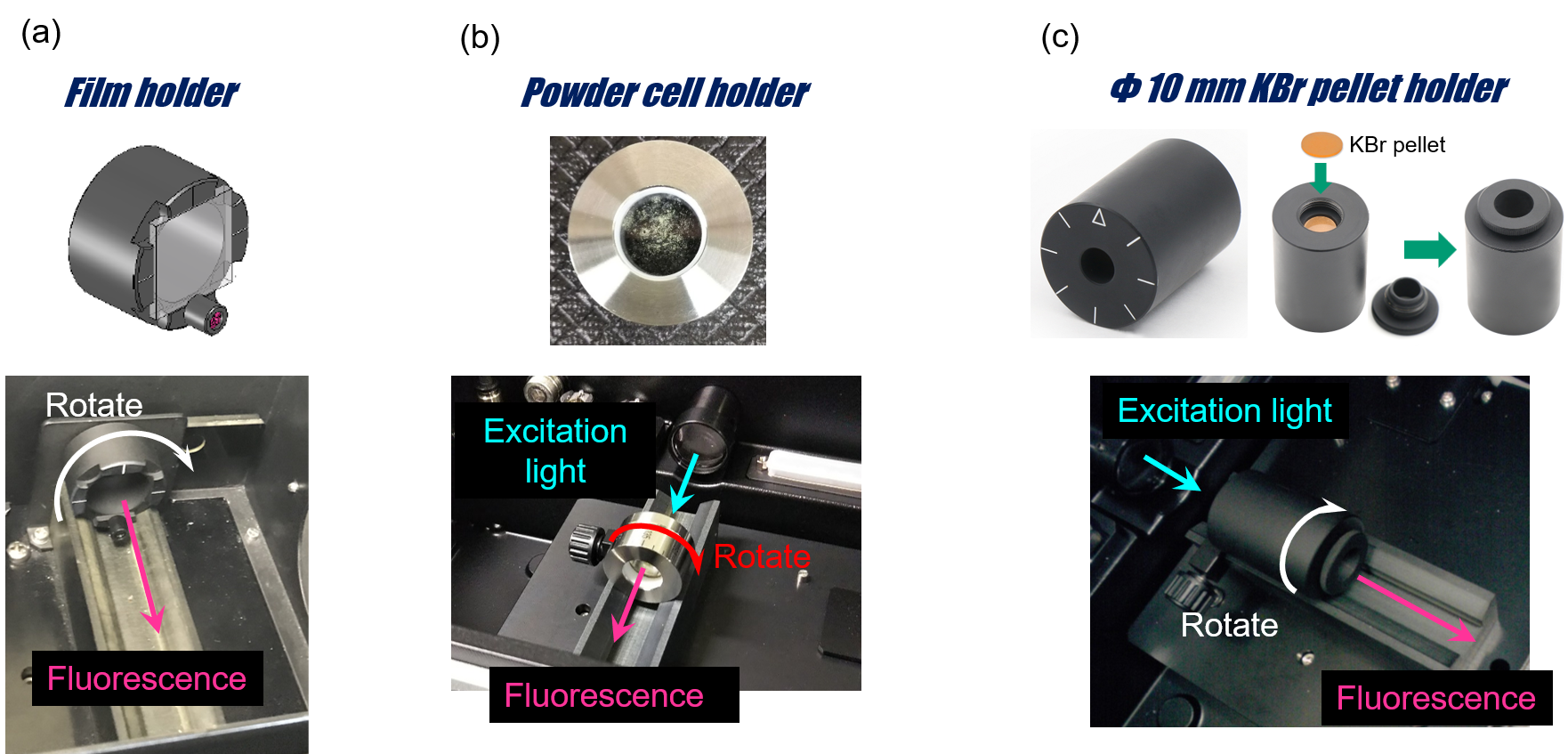
Fig. 10 CPL-300 sample holders for solid-sample measurements
Related Posts:
 Analysis of electronic structure of phthalocyanine…
 Highly efficient spectral measurement methods using…
 Evaluation of aggregation-induced circularly…
 Diffuse Reflection Measurements of Tooth using…
 Circular Dichroism Spectroscopic Study of b-Amyloid…
 Resonance Raman Scattering for Trace-Level Component…