
Introduction
Nylon 6 (PA6, polyamide 6) is a polymer with applications such as electronic devices and mechanical components. PA6 undergoes degradation due to factors such as exposure to ultraviolet light and repeated recycling. Quantitatively evaluating such associated changes in physical properties is important for developing products made from PA6 and controlling their quality. One method for performing such evaluations of polymer raw materials involves the use of gel permeation chromatography (GPC) to determine the molecular weight distribution. When analyzing PA6 by GPC, hexafluoroisopropanol (HFIP) is typically used as a solvent. However, since HFIP is extremely expensive, excessive solvent consumption becomes problematic. One means of reducing solvent consumption is to perform the analysis on a semi-micro scale. This also offers the advantage of shorter analysis times.
In this study, we investigated the degradation of PA6 test samples caused by irradiation in a xenon accelerated weathering tester. Changes in the molecular weight distribution were evaluated using a GPC system. This was a semi-micro scale GPC system compatible with HFIP, equipped with a refractive index detector (RI-4035) and a high-performance analytical GPC column. For data analysis, we used the molecular weight distribution calculation program in ChromNAV. We created a molecular weight calibration curve using polymethyl methacrylate (PMMA) as the standard sample and calculated the molecular weight distribution for PA6 samples.
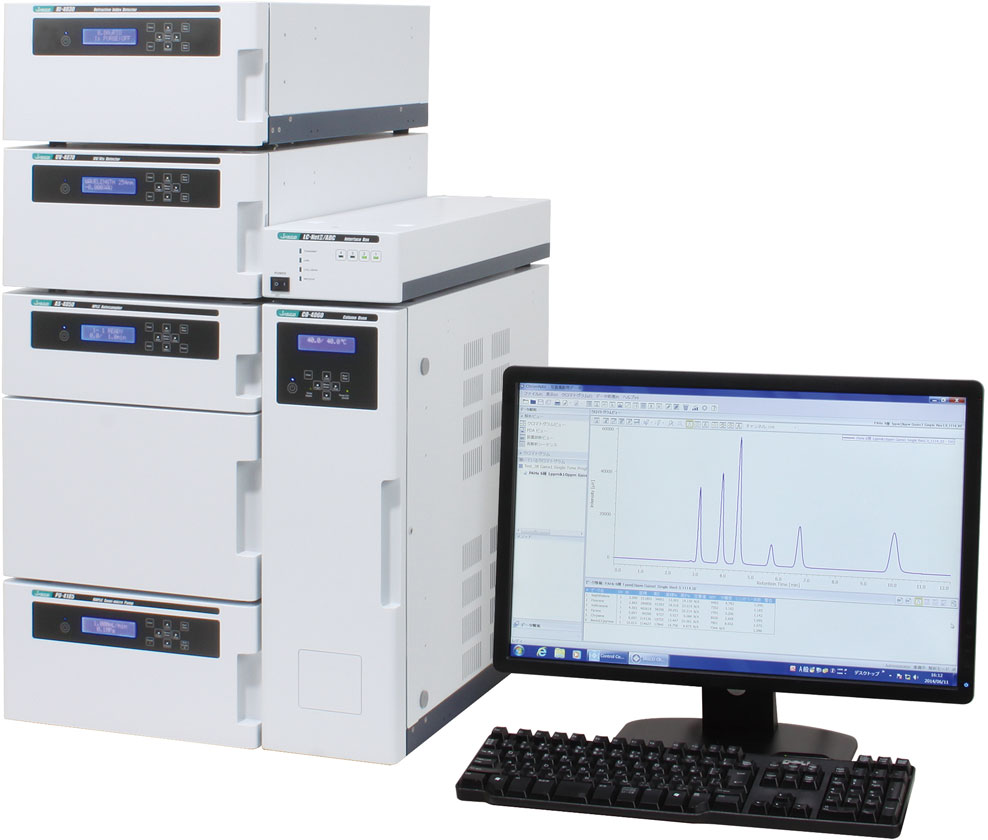
LC-4000 GPC system
Experimental
LC system
Pump: PU-4185
Autosampler: AS-4150*
Column oven: CO-4060
Detector: RI-4035
* with option units
LC conditions
Column: GPC LF-404 x2 (4.6 mmI.D. x 250 mmL, 6 µm)
Eluent: 5 mmol/L sodium trifluoroacetate in HFIP
Flow rate: 0.2 mL/min
Column temp.: 40 ºC
Injection volume: 20 µL
Sample
◦Standard samples for creating molecular weight calibration curve
PMMA mixed sample
(two samples prepared for different molecular weight peaks (Mp))
Standard sample 1: Mp 772000, 51900, 6900, 645
Standard sample 2: Mp 211000, 21700, 2200
Each sample was dissolved and diluted in the mobile phase to 0.025 % (w/v)
◦Test samples for evaluation
PA6 test samples (approx. 2.5 mm, pellet-shaped, Standard Test Piece Co., Ltd.)
Structure

Keywords
PA6, GPC, molecular weight distribution, PMMA, molecular weight calibration curve, HFIP, semi-micro scale, RI detector
Results
Figure 1 shows the procedure used for the photodegradation test. For light irradiation, a xenon accelerated weathering tester (SOLARBOX 1500e, manufactured by Cofomegra, provided by JASCO INTERNATIONAL Co., Ltd.) was used, with irradiation performed at an irradiance of 60 W/m² and a temperature of 65 ºC. Three test samples were sequentially inserted into the weathering tester at different times to give total irradiation times of 10 days, 5 days, and 1 day for Samples 1, 2 and 3, respectively. After irradiation was completed, to measure the degraded layer of the test samples using GPC, a plane type slicer (Slice Master KS-10, provided by JASCO Engineering Co., Ltd.) was used to remove the degraded layer from the irradiated surface of the test samples. The cut fragments were dissolved in the mobile phase to a concentration of 0.1% (w/v) for use as the GPC measurement samples.

Fig. 1 Photodegradation test procedure
Figure 2 shows chromatograms for two PMMA samples (standard sample 1 and 2), and Figure 3 shows the resulting calibration curve.
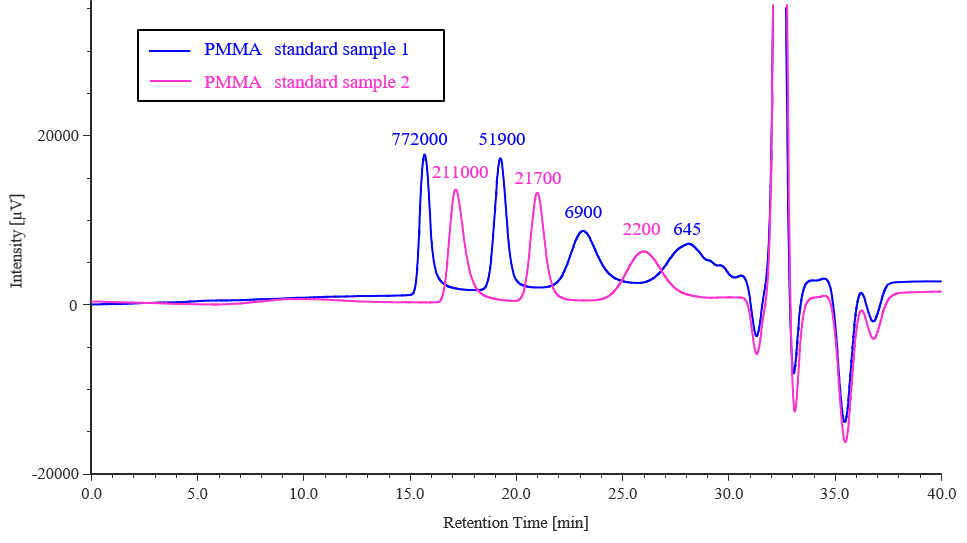
Fig. 2 Chromatograms for PMMA standard samples
(The number above each peak represents the corresponding peak molecular weight Mp)
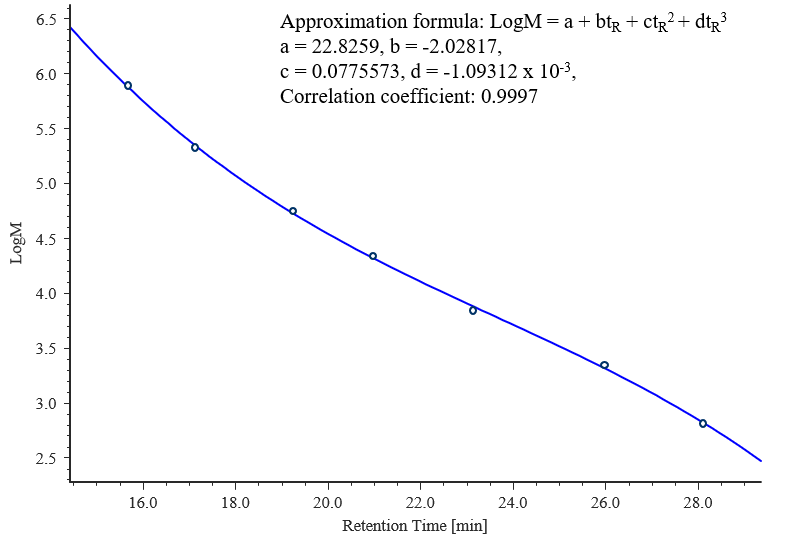
Fig. 3 Molecular weight calibration curve created using PMMA standard samples
Figure 4 shows chromatograms for the PA6 samples subjected to photodegradation testing, together with that for an unirradiated sample. Figure 5 shows the corresponding differential molecular weight distribution curves, where the horizontal axis represents the logarithm of the molecular weight to make it easier to observe changes in the distribution. It can be seen that the distribution shifts towards lower molecular weight as the irradiation time increases.

Fig. 4 Chromatograms for PA6 test samples
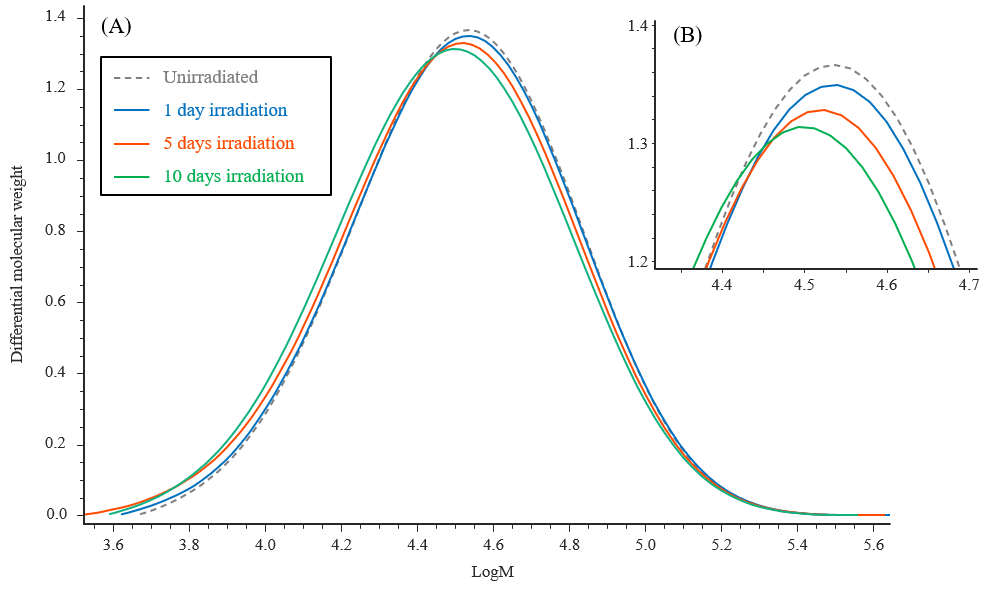
Fig. 5 Differential molecular weight distribution curves for PA6 test samples
(A) Full curves (B) Enlarged view of peak tops
Table 1 shows the PMMA-equivalent average molecular weight calculation results, and Figure 6 shows the changes in the number-average molecular weight (Mn) and weight-average molecular weight (Mw) with irradiation time. As the irradiation time is increased, Mp, Mn and Mw decreases. This suggests that the degradation of the main chain occurred1.
Table 1 PMMA-equivalent average molecular weight calculation results
| Sample | Mp | Mn | Mw | Mw/Mn |
| Unirradiated | 36848 | 26964 | 41225 | 1.53 |
| 1 day irradiation | 36510 | 26481 | 41150 | 1.55 |
| 5 days irradiation | 36010 | 25026 | 39848 | 1.59 |
| 10 days irradiation | 34245 | 24434 | 38741 | 1.59 |
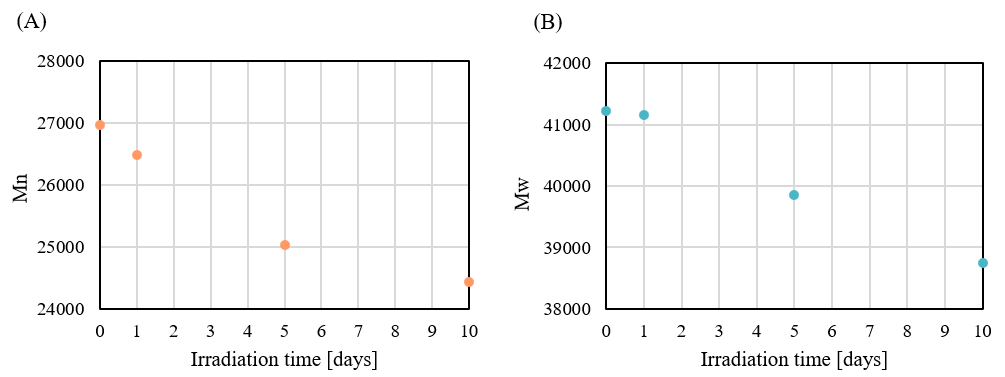
Fig. 6 Change in average molecular weight with irradiation time
(A) Number-average molecular weight (Mn) (B) Weight-average molecular weight (Mw)
Conclusion
In this study, we investigated the degree of photodegradation of PA6 test samples irradiated in a xenon accelerated weathering tester. The molecular weight distribution was determined using a semi-micro scale GPC system. As the irradiation time is increased, Mp, Mn and Mw decreased. This suggests that the degradation of the main chain occurred. These measurements can be utilized for the quantitative evaluation of resin degradation.
References
- X. Colin, J. Verdu: C. R. Chim., 9, 1380 (2006). DOI: 10.1016/j.crci.2006.06.004
Related Posts:
 Evaluation of Degradation of PET by Molecular Weight…
 Evaluation of Degradation of POM by Molecular Weight…
 Monitoring of Aggregates and Degradation Products by…
 Stability Evaluation of Trastuzumab and Rituximab…
 Efficient Evaluation of Substituent Effects in…
 GPC/SEC measurement of Polystyrene Oligomers using…