
Introduction
Supercritical fluid chromatography (SFC) uses carbon dioxide as the main solvent in the mobile phase and is characterized by its ability to maintain high separation efficiency even when performing analyses at high flow rates (linear velocity). Among the sample components that are separated and fractionated by taking advantage of this feature are chiral compounds. To investigate the optimal separation conditions for chiral compounds, a screening method is used to comprehensively analyze individual substances using solvents and columns. Recently, chiral columns with a 3 µm particle size have been developed for SFC, and are expected to provide faster and more efficient chiral-compound separation than conventional SFC using 5 µm particle-size columns.
The circular dichroism (CD) detector used is capable of outputting UV chromatograms, CD chromatograms, and the g-factor (CD/UV ratio), in real time. In the CD chromatogram, different optical isomers produce peaks with opposite signs (positive or negative). Therefore, even if the elution order is reversed during screening, it can be discriminated.
In this application note, we used a JASCO SFC system with the Method Scouting Support Program, an add-in software for ChromNAV Ver. 2. Three modifier solvents and 10 chiral columns with a 3 µm particle size for high speed and high efficiency were used for fast screening of benzoin*1 , which is classified as an aromatic compound, using three modifier solvents and ten reduced size chiral columns of 3 µm particle size which are expected to be fast and efficient.
*1 It is a different compound from the perfume benzoin.
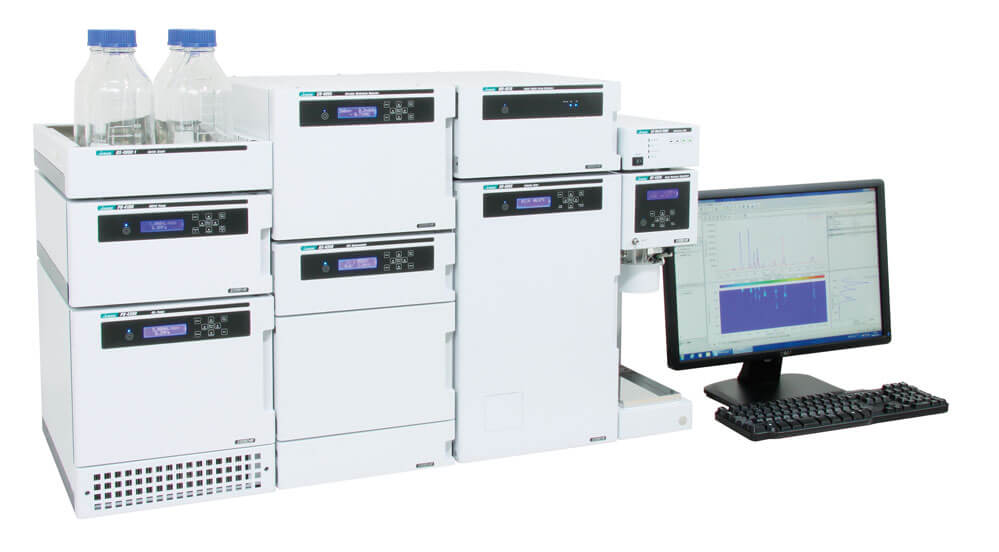
SFC method scouting system
Experimental
Instruments
CO2 pump: PU-4380
Modifier pump: PU-4185*
Autosampler: AS-4350
Column oven: CO-4065*
PDA detector: MD-4010*
CD detector: CD-4095*
BP regulator: BP-4340
* with option units
SFC Conditions
Column: CHIRALPAK IA/SFC, IB-N/SFC, IC/SFC, ID/SFC, IE/SFC, IF/SFC, IG/SFC, IH/SFC, IJ/SFC, IK/SFC (3.0 mmI.D. ´ 50 mmL, 3 µm)※
Eluent : Carbon dioxide/modifier (75/25)
Modifier: A; Methanol B; Acetonitrile / ethanol (80/20) C; t-Butyl methyl ether / ethanol (80/20)
Flow rate: 1.2 mL/min
Column temp.: 40 ºC
Wavelength: 230 nm (MD-4010) 250 nm (CD-4095)
Back pressure: 10 MPa
Inj. volume: 1 µL
Sample: 0.5 mg/mL benzoin in methanol
* CHIRALPAK is a trademark or registered mark of Daicel Corporation.
Structure

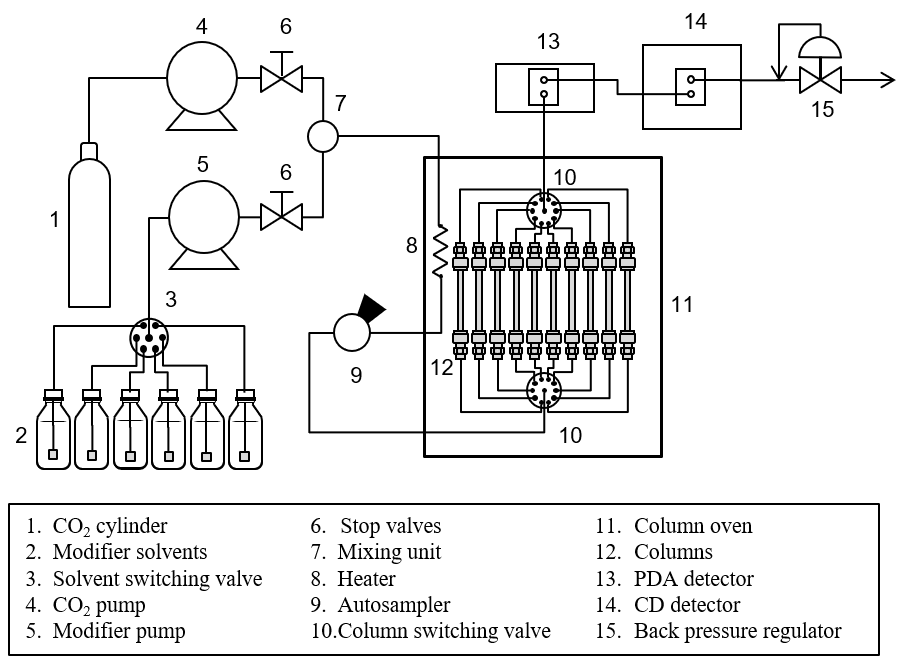
Schematic Diagram
Keywords
Benzoin, SFC, screening, method scouting, chiral separation, CD detector, CHIRALPAK, 3 µm
Results
The column stabilization time during screening was set to 10 min only for the first column after solvent changeover and 3 min for the other columns, taking into account solvent substitution in the system. The analysis time was set to 3.0 min. The total required time for this screening was 3.4 hours per compound. Figure 1-1 shows the screening results obtained using a photodiode array (PDA) detector at a wavelength of 230 nm, and Figure 1-2 shows those obtained using a CD detector at a wavelength of 250 nm. Each row of chromatograms represents a different modifier solvent, and each column of chromatograms represents a different chiral column. In the CD chromatograms, different optical isomers produce signals with opposite signs.
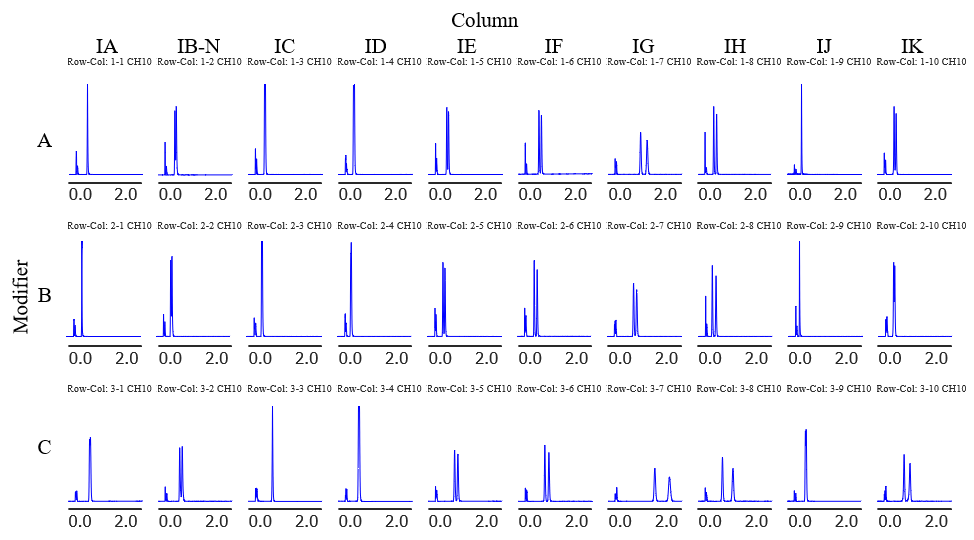
Fig. 1-1 Chromatograms of benzoin obtained using method scouting system (PDA detection wavelength: 230 nm)
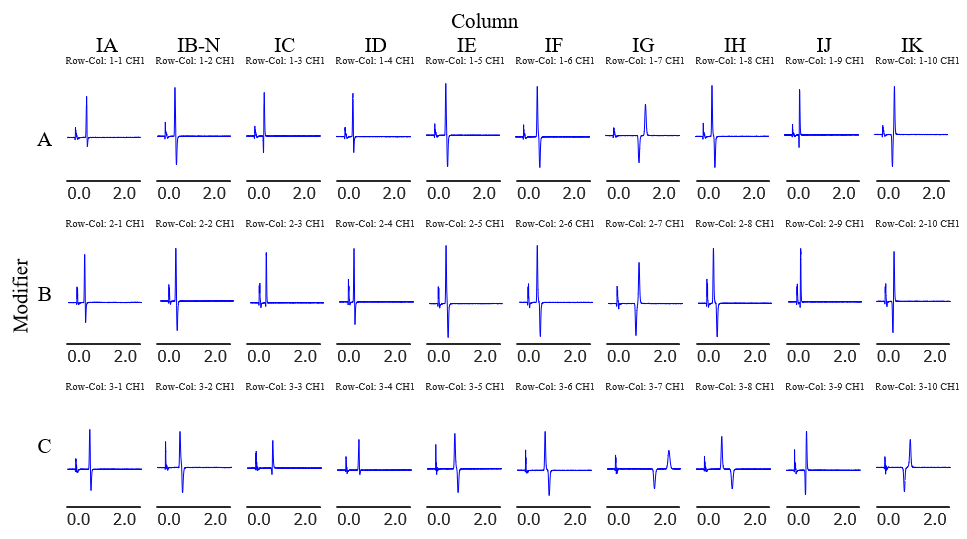
Fig. 1-2 Chromatograms of benzoin obtained using method scouting system (CD detection wavelength: 250 nm)
Table 1 shows the degree of separation of flavanones under each condition. Results with a resolution of 1 or less are marked as incomplete separation (I.S.). Among the modifiers examined in this study, there were combinations that achieved complete separation under all solvent conditions. Furthermore, when using t-butyl methyl ether/ethanol (80/20) as the modifier, greater retention and higher resolution were generally observed compared to other solvents.
Table 1 Comparison of resolution
| Column | |||||||||||
| IA | IB-N | IC | ID | IE | IF | IG | IH | IJ | IK | ||
| Modifier | Methanol | N.S. | 1.12 | N.S. | N.S. | 1.39 | 1.85 | 3.00 | 2.33 | N.S. | 1.69 |
| Acetonitrile / ethanol | N.S. | 1.09 | N.S. | N.S. | 1.62 | 2.39 | 1.82 | 2.73 | N.S. | I.S. | |
| t-Butyl methyl ether / ethanol | I.S. | 1.65 | N.S. | N.S. | 1.77 | 2.38 | 4.50 | 4.38 | I.S. | 2.90 | |
Figure 2 shows the CD chromatogram of a column that achieved chiral separation under conditions using t-butyl methyl ether/ethanol (80/20) as a modifier. By obtaining the CD chromatogram using a CD detector, it was found that IG and IK exhibited a reversal in elution order compared to other columns.
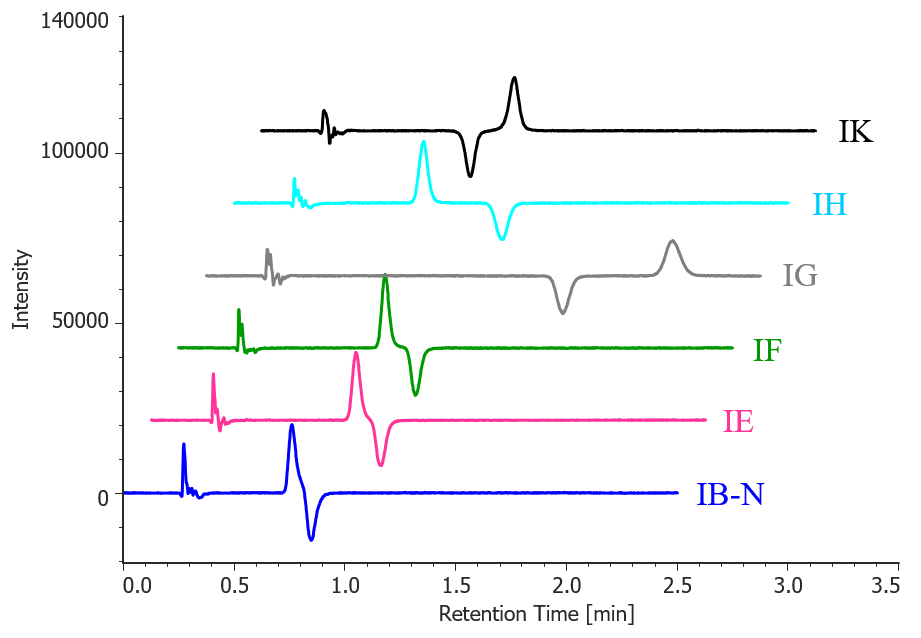
Fig. 2 CD chromatograms of benzoin
Conclusion
In this study, the use of a size-reduced chiral column with 3 µm particle size in SFC enabled rapid method scouting, allowing the selection of separation conditions to be completed within just 3.4 hours. Conditions that resulted in only peak apex separation have the potential to be further optimized to achieve baseline separation by adjusting the column dimensions and modifier.
By monitoring the CD chromatogram obtained from the circular dichroism detector, it was possible to distinguish even if the elution order is reversed due to the column type.
The SFC method scouting system can be effectively used to explore separation conditions for chiral compounds because SFC allows separation studies in a shorter time compared to HPLC.
Related Posts:
 Analysis of Flavanone by SFC-PDA-CD Method Scouting…
 Analysis of Flurbiprofen and Ketoprofen by SFC-PDA…
 Analysis of Hydroxyzine by SFC-PDA-CD Method…
 Rapid Column Screening for Chiral Separation by Parallel SFC
 Comparison of Separation Behavior among Silica-based…
 Chiral preparative separation of warfarin using…