Introduction
Key Points
The electron-cooled Type-II superlattice (T2SL-TE) detector is a highly sensitive detector that does not require liquid nitrogen and complies with the RoHS Directive.
The T2SL-TE detector is a semiconductor-type detector that can be mounted on the IRT-5X/7X infrared microscopes (Fig. 1, right). A superlattice refers to a structure in which different semiconductor materials, each with a thickness on the nanometer scale, are alternately stacked.
Generally, MCT (HgCdTe) detectors are used in infrared microscopes. In particular, liquid nitrogen-cooled MCT detectors offer high sensitivity and are highly effective for measuring microscopic areas on the µm scale. However, because they require cooling with liquid nitrogen, they entail running costs and handling risks. Furthermore, MCT detectors contain substances subject to restrictions under the RoHS Directive, such as mercury and cadmium. Although the use of mercury and cadmium in infrared spectroscopy detectors is permitted under exceptions to the RoHS Directive, these exceptions are periodically reviewed, making compliance with environmental regulations a critical factor in detector selection. In contrast, the T2SL-TE detector does not require liquid nitrogen cooling and is composed of materials not subject to restrictions—such as indium, arsenic, and antimony—making it compliant with the RoHS Directive. Therefore, it can serve as a new alternative to liquid nitrogen-cooled MCT detectors in terms of both operability and environmental compliance. In this paper, we report on examples of micro-area measurements and mapping measurements using the T2SL-TE detector.
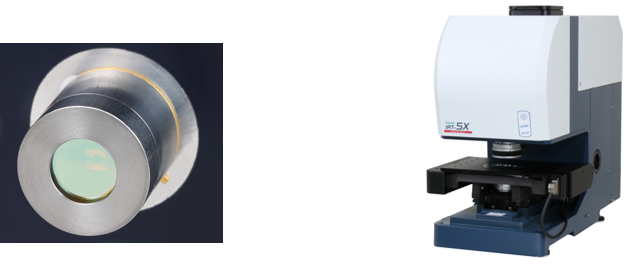
Figure 1 (Left) Type-II superlattice detector (T2SL), (Right) IRT-5X infrared microscope
Experimental
Samples
– Sample 1 : Polypropylene fiber fragment
A polypropylene fiber fragment was sandwiched between two KBr plates and flattened using
a hand press.
– Sample 2 : Polystyrene solution
A chloroform solution of polystyrene was thinly applied to the KBr plate.
– Sample 3 : Food packaging film
A cross-sectional slice of food packaging film was prepared using a Slice Master® (manufactured by JASCO Engineering Co., Ltd.), sandwiched it between two KBr plates, and thinned it into a film using a hand press.
System
Instrument : FT/IR-6X Fourier Transform Infrared Spectrometer
Accessories : IRT-5X Infrared Microscope
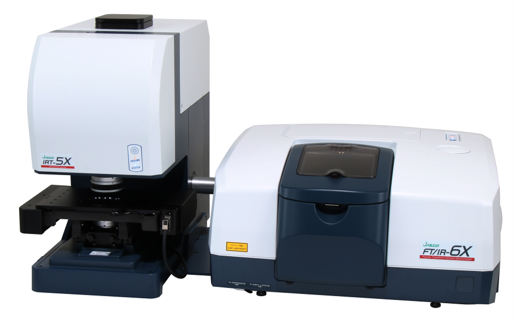
Figure 2 Microscopic FT-IR measurement system (FT/IR-6X + IRT-5X)
Measurement Conditions
Measurement Method : Microscopic Transmission Method
Objective : 16x Cassegrain objective
Detector : Electron-cooled Type-II superlattice detector (T2SL-TE-5X)
Measurement Wavenumber Range : 4000–750 cm-1
Keywords
Infrared microscope, IRT-5X, IRT-7X, electronic cooling, superlattice, liquid nitrogen, RoHS Directive
Results
Sample 1: Measurement of Polypropylene (Comparison with Other Detectors)
Polypropylene is used in a wide range of fields, from daily necessities to industrial products. For example, in factory manufacturing processes, it is used in many components and steps; therefore, due to wear and tear or damage, it may become mixed into products as microscopic foreign matter. Here, assuming the presence of microscopic foreign matter, we measured polypropylene fiber fragments under the following conditions: an aperture size of 50 × 50 µm and 16 accumulations (Mid-Band MCT (hereinafter M-MCT) detector and T2SL-TE detector: approximately 10 seconds; TGS detector: approximately 20 seconds).
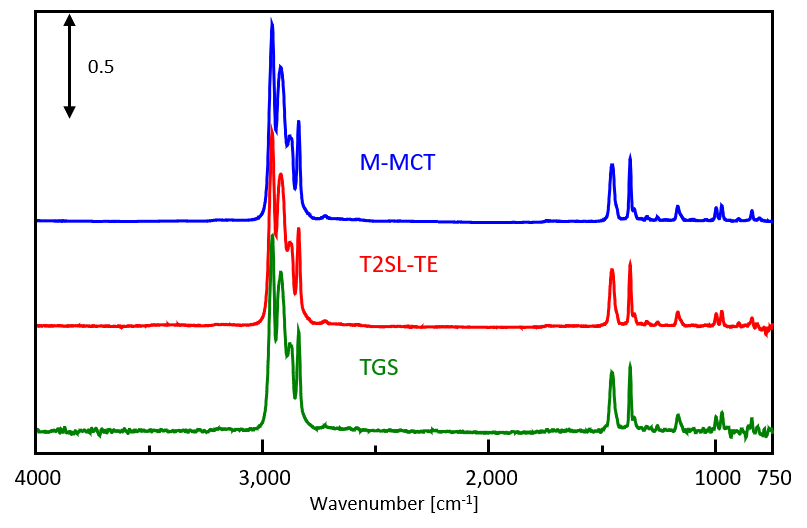
Figure 3 Spectrum of polypropylene
Measurements using the T2SL-TE detector yielded high-quality spectra in the micro-region across a wide wavenumber range. These results are comparable to those obtained with liquid nitrogen-cooled M-MCT detectors, which are suitable for high-sensitivity measurements, and the spectra exhibit less noise than those obtained with TGS detectors, which do not require liquid nitrogen cooling. Thus, the T2SL-TE detector can be considered effective for the qualitative analysis of minute foreign particles.
Sample 2: Polystyrene Measurement (Micro-Aperture Size)
Infrared microscopy is required to analyze microscopic samples on the µm scale for applications such as foreign material analysis. Here, to verify whether the T2SL-TE detector can meet this requirement, we performed measurements of a microscopic area with the aperture size set to 10 × 10 µm. The sample consisted of polystyrene dissolved in a solvent and thinly coated onto a KBr plate; we verified whether the sample could be identified when a transmission measurement was performed with an integration time of approximately 30 seconds.
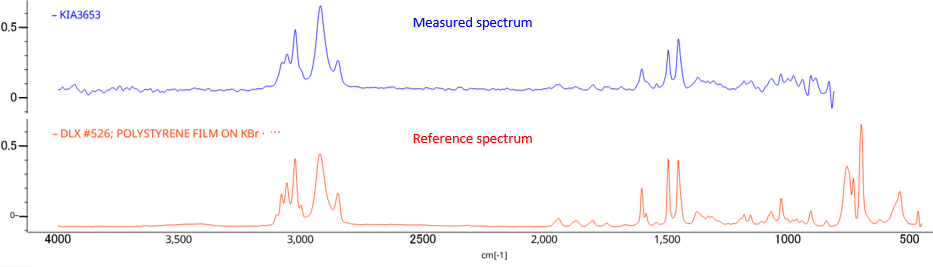
Figure 4 Results of a database search using KnowItAll
The obtained spectra were compared with a spectral database using Wiley’s KnowItAll software, confirming that polystyrene had the highest match score and that the spectral shapes of the two were in good agreement (Figure 4). This demonstrates that using the T2SL-TE detector makes it possible to acquire spectra of sufficient quality for qualitative analysis in a short time, even for very small areas.
Sample 3: Mapping Measurements of Multilayer Films
Mapping measurements using an infrared microscope are employed in a wide range of fields—including materials, the environment, and food—as a method for visualizing component distributions. Here, we performed mapping measurements on a cross-section of food packaging film using the T2SL-TE detector and created a color-coded map using multivariate curve resolution (MCR), a multivariate analysis technique. For the MCR analysis, we used the analysis assistance function.
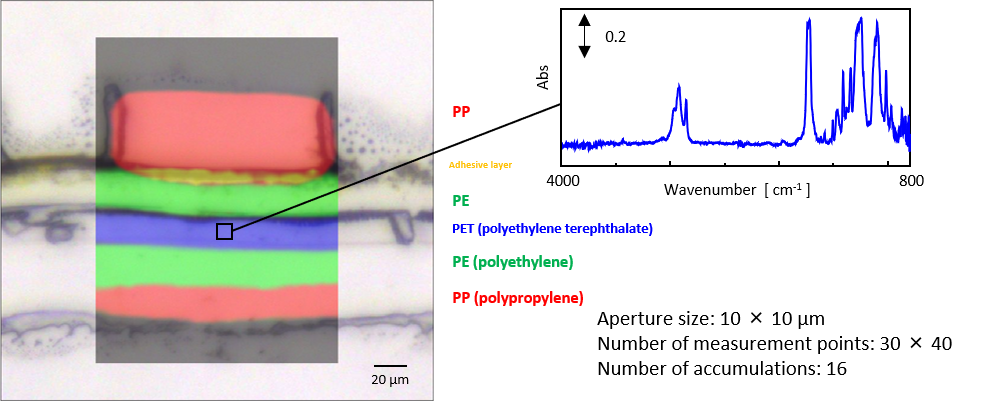
Figure 5 (Left) Observation image of a multilayer film and a color-coded diagram of each component; (Right) PET spectrum
The color-coded map generated using MCR allowed us to visualize the distribution of PP (polypropylene), PE (polyethylene), PET (polyethylene terephthalate), and the adhesive layer within the cross-section of the food packaging film. As demonstrated, mapping measurements using the T2SL-TE detector with an aperture size of 10 × 10 µm enable detailed visualization of component distributions. Furthermore, since liquid nitrogen is not required, this method is well-suited for long-duration mapping measurements over a wide measurement area.
Conclusion
The T2SL-TE detector enables high-sensitivity measurements without the use of liquid nitrogen. As a result, it supports measurements of microscopic areas, visualization of component distributions through mapping measurements, as well as reflectance and ATR measurements. Like liquid nitrogen-cooled M-MCT detectors, it can be used as a high-sensitivity detector for infrared microscopy.